


Team Draper Commercial Mission 1
(ispace Mission 5)
Mission Outline
The ULTRA lander will deploy a relay communication satellite to communicate back to Earth from the far side of the Moon. ispace-U.S. will offer lunar communication services capitalizing on the extended lifetimes of the satellites.
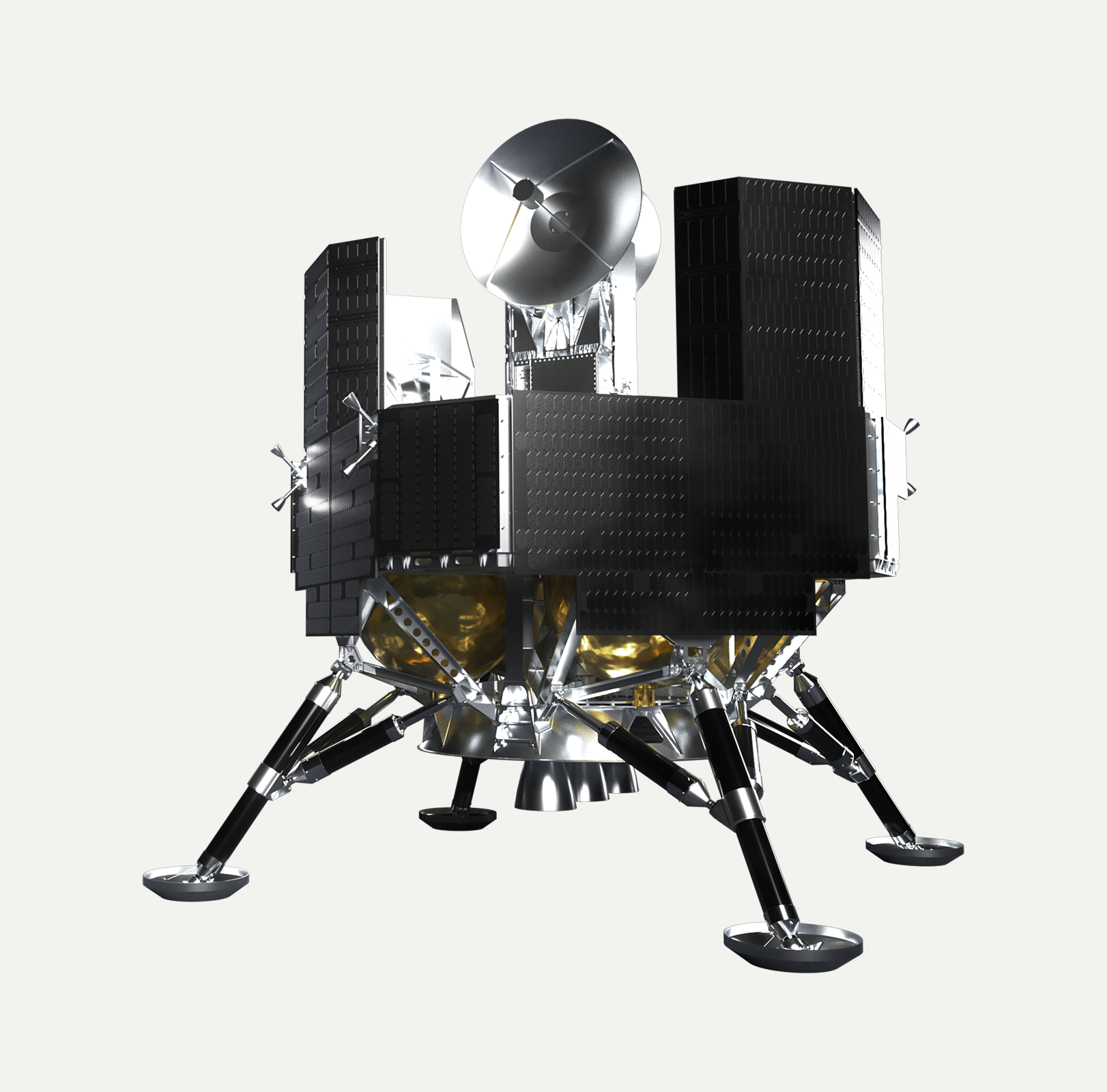
ULTRA Lander
Size:
Height approx. 3.6m
Width approx. 3.3m
(Landing legs extended)
Weight:
Approx. 1,000kg(Dry)
Payload Capacity:
Max. several hundreds kg
Summary:
Development of the ULTRA lander is currently under way. It will first be used for Mission 3, currently planned to launch in 2028. The ULTRA lander for Mission 3 is being funded by a Small Business Innovation Research grant administered by Japan’s Ministry of Economy, Trade and Industry. The same ULTRA lander design will further be used in the following Missions 4 (planned for 2029) and Mission 5 (planned for 2030).
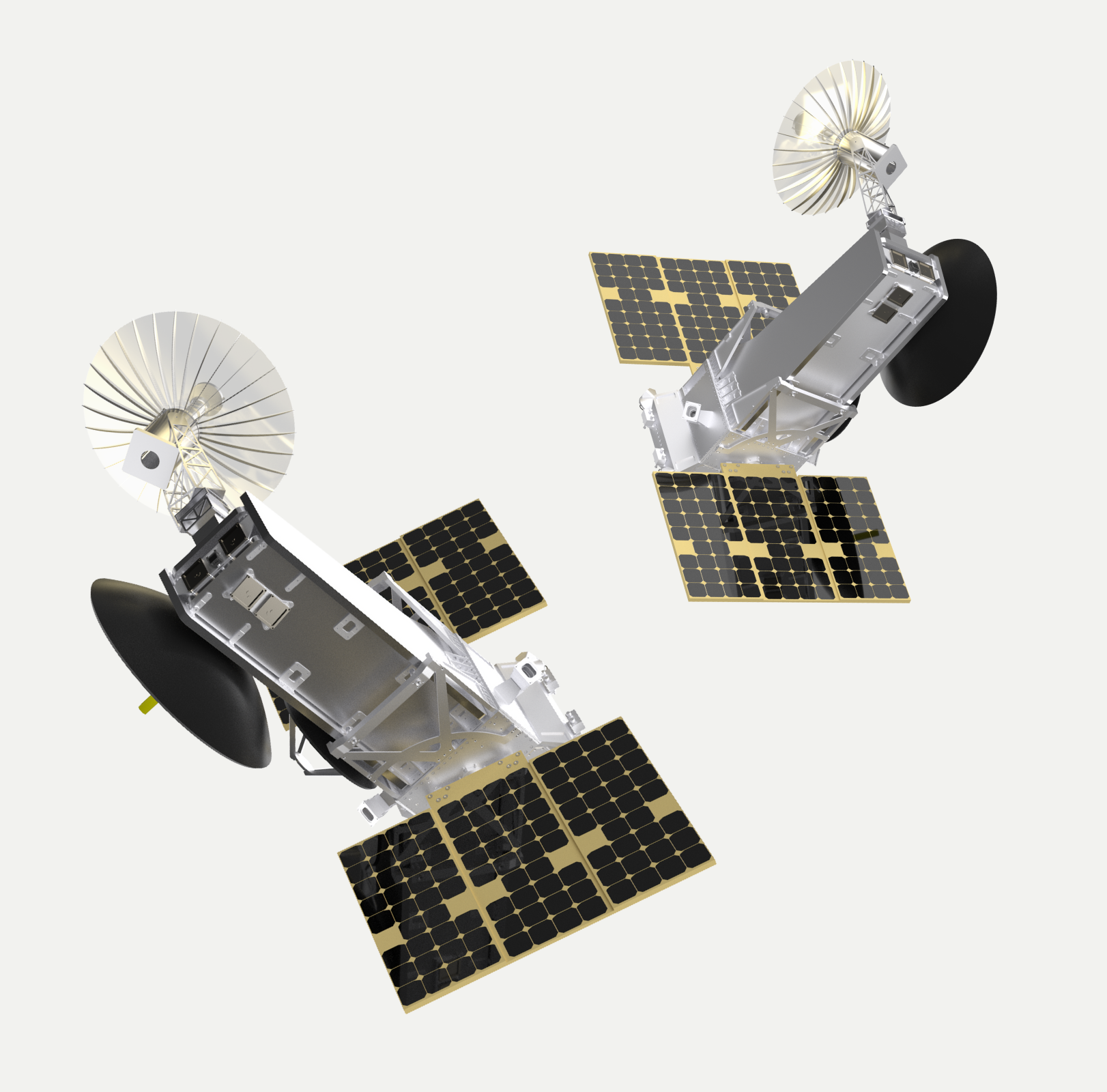
Alpine & Lupine satellites
Summary:
Alpine and Lupine are equipped with bi-directional S-band command, telemetry links, and a high-speed Ka-band lunar proximity uplink and X-band downlink to Earth for low-latency real-time communications. After the primary surface mission, Alpine and Lupine naturally circularize into High Circular Polar Orbits (HCPO). These orbits provide near-global coverage of the lunar surface with a focus region over the poles. For each lunar day cycle, the relays provide simultaneous visibility of Earth and lunar South Pole regions.

PAYLOADS
NASA CP-12 Science Payloads
Team Draper’s ispace-U.S. APEX1.0 lunar lander will deliver three NASA CLPS payloads to Schrödinger Basin.
-
The Farside Seismic Suite (FSS), one of the two payloads to be delivered to Schrödinger basin, will carry two seismometers: the vertical Very Broadband seismometer and the Short Period sensor. FSS will return the agency’s first seismic data from the far side of the Moon, helping scientists to understand tectonic activity there. This may reveal how often the lunar far side is impacted by small meteorites and provide new constraints on the internal structure of the Moon.
- Type of Instrument: Seismometers
- Key Measurement: Determine if the seismicity is different on the far side of the Moon than what was measured by Apollo on the lunar near side.
- Task Order: CP-12
- Lead Development Organization: NASA’s Jet Propulsion Laboratory
- Payload PI: Dr. Mark Panning
-
The Lunar Interior Temperature and Materials Suite (LITMS), also headed to the Schrödinger basin, is a suite of two instruments: the Lunar Instrumentation for Subsurface Thermal Exploration with Rapidity (LITMS-LISTER) pneumatic drill and the Lunar Telluric Currents (LITMS-LTC) electrodes. This payload will investigate the heat flow and electrical conductivity of the lunar interior in the Schrödinger basin, giving an in-depth look at the Moon’s internal mechanical and heat flow. The Lunar Magnetotelluric Sounder (LMS) is therefore a virtual instrument composed of data from LTC and LuSEE-Lite.
- Type of Instrument: Lunar Magnetotelluric Sounder and Heat Flow Probe + Sounder and Drill
- Key Measurement: Determine the heat flow in thick lunar crust and the electrical conductivity of the interior.
- Task Order: CP-12
- Lead Development Organization: Southwest Research Institute
Payload PI: Dr. Robert Grimm
-
LuSEE-Lite uses plasma wave measurements to characterize the lunar ionosphere and the interaction of the solar wind and magnetospheric plasma with the lunar surface and crustal magnetic fields. The payload uses DC electric and magnetic field measurements to study the conditions that control the electrostatic potential of the lunar surface, which in turn plays a controlling role in dust transport.
- Type of Instrument: LuSEE-Lite is a suite of sensors and electronics designed to measure and characterize the electric and magnetic field environment of the lunar surface from DC to 20 MHz. The payload consists of a fluxgate magnetometer, a search coil magnetometer, and a 7-meter-tall vertical monopole.
- Key Measurement: Lunar ionosphere – plasma waves, surface geospacer interactions – plasma waves, lunar surface electrostatic potential/sheath, dust/electrostatic field interactions, support for LMS/LITMS electromagnetic sounding, electrical structure of the upper mantle
- Task Order: CP-12
- Lead Development Organization: University of California, Berkeley
Payload PI: Dr. Stuart Bale
PAYLOADs
Commercial Payloads
The Italian Space Agency (ASI)
Laser Retroreflector Array (LaRA2)
Control Data Systems SRL(CDS)
ispace-EUROPE
Micro Rover
Magna Petra Corp.
(NASA’s MSOLO instrument)
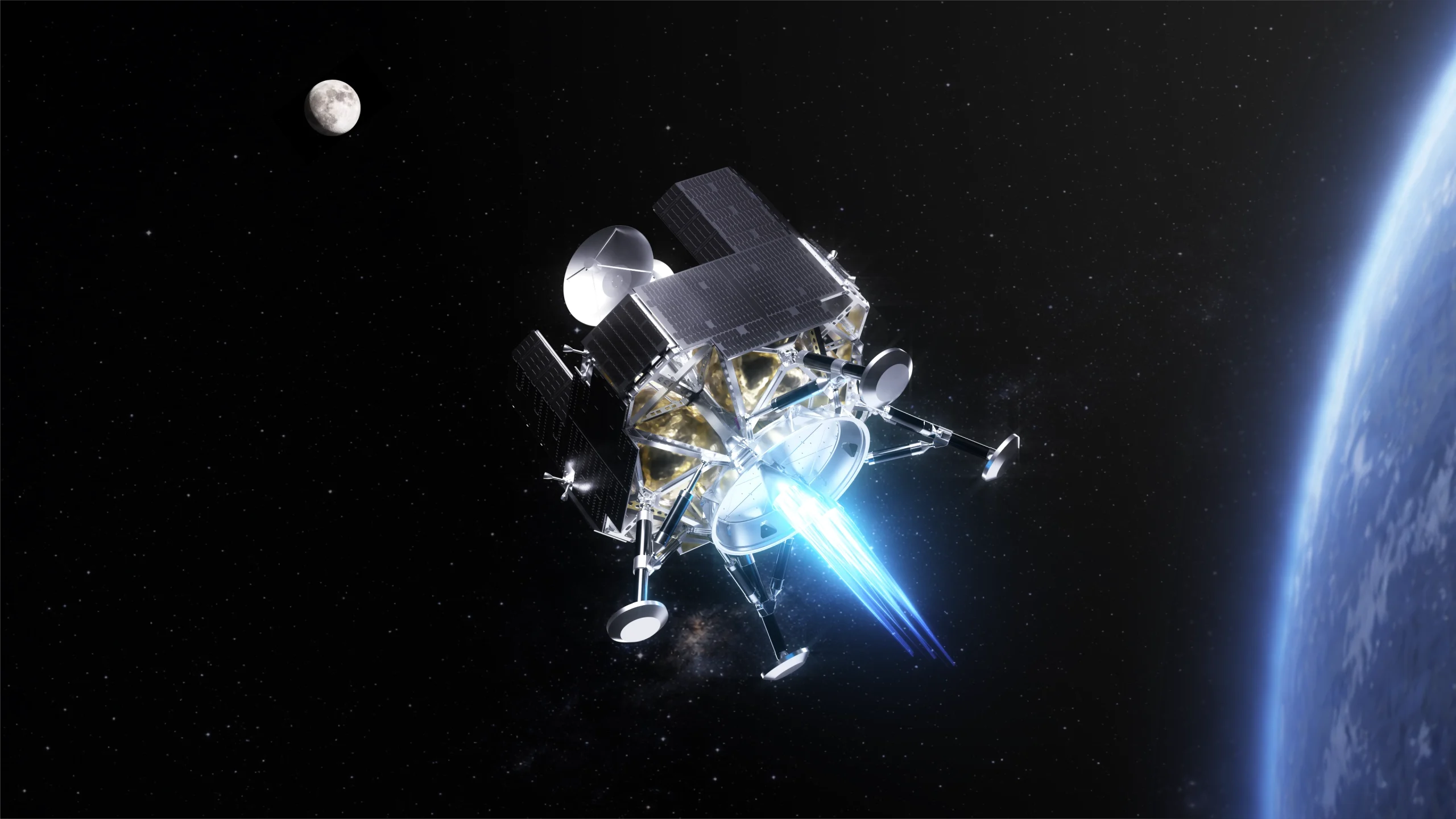
ULTRA is designed to accommodate numerous commercial and academic payloads to fly with three NASA Artemis science payloads to the lunar surface.

These phases include a 5-day launch window each month, a dedicated launch on board a reliable and flight proven launch vehicle, a Geosynchronous Transfer “parking” Earth Orbit, a direct-injection cislunar transfer, and descent and landing algorithms proven by a heritage ispace mission.
Learn more about ispace
and our lunar quest.
-
We view the Moon as an opportunity. It is an opportunity to expand human existence into space and we believe the Moon is a stepping-stone to Mars and deeper space exploration. It is our first step to establishing human existence beyond the confines of Earth.
-
We are a global company with entities in Japan, the United States and Luxembourg, ready to serve customers in each market.
-
ispace is a lunar transportation company with a vision to expand human presence beyond the Earth. We are building lunar landers to transport customer payloads to lunar orbit and the surface. In addition, we design lunar rovers to explore the Moon. Our goal is to deliver and develop the infrastructure necessary to support human life on the Moon.
-
Yes, ispace is publicly traded on the Tokyo Stock Exchange, Growth Market. In October 2024, ispace was selected for the TSE Growth Market Core Index.